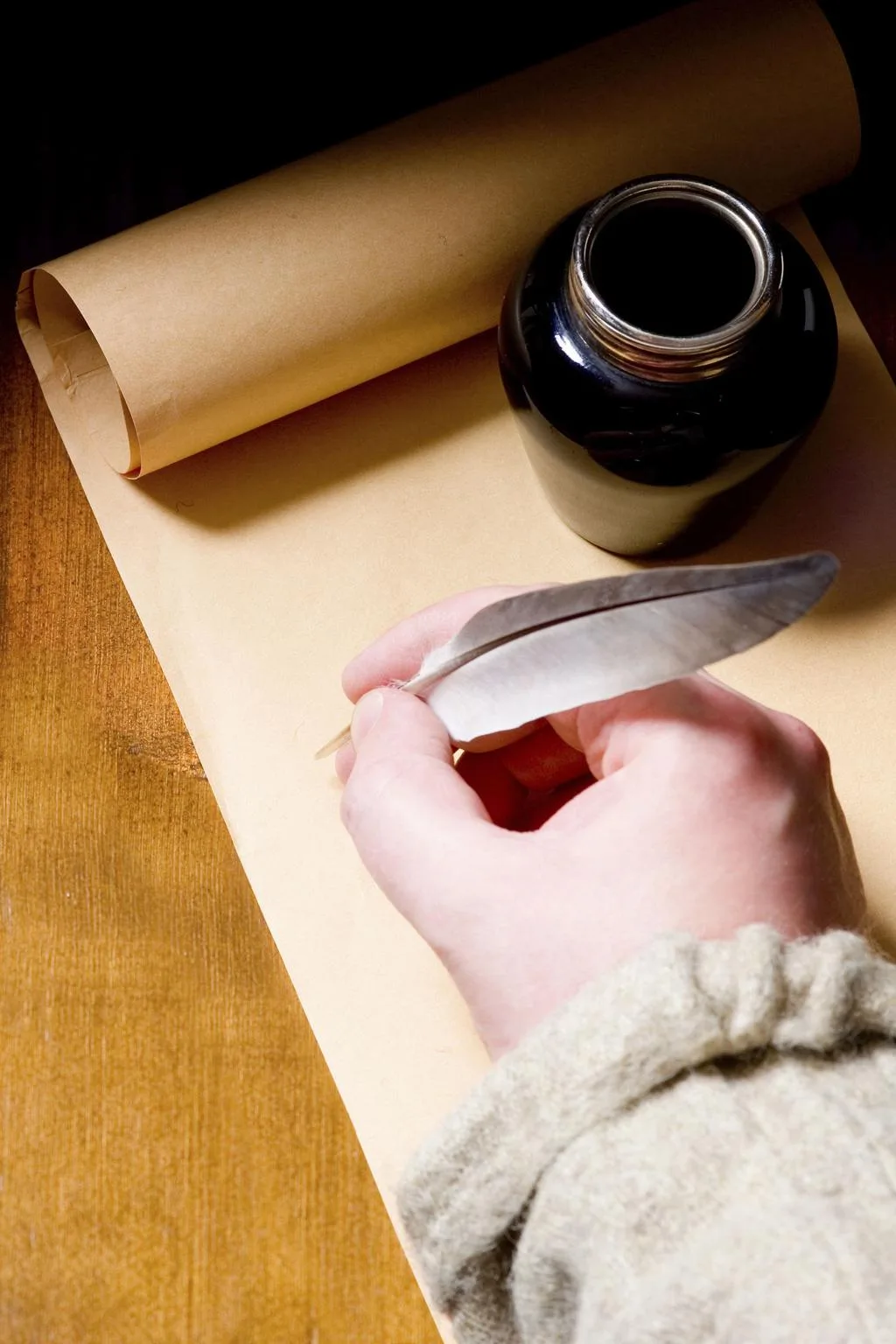
The quality of a Sefer Torah, a mezuzah, or a pair of tefillin depends as much on the Sofer's knowledge as on the tools he uses. A poorly chosen kulmus or unstable ink can ruin hours of work, so it's worth understanding what to look for in each tool before writing.
The kulmus is an extension of the Sofer's hand, and there's no single "best" one for everyone: a stainless steel (nirosta) kulmus is more durable and holds its edge longer, ideal for long writing sessions. A ceramic kulmus offers a different stroke, softer on the parchment, preferred by soferim looking for that particular feel. The right choice depends on how you hold your hand and the script style (ktav) you work in — it's best to try both.
The tzipporen (nib/point) is used to mark guide lines and fine letter details (like the tagin crowns). It needs a precise, even edge, because any irregularity shows directly in the letter's shape.
Ink deserves the same attention as the kulmus: it must flow evenly, without thickening mid-page or dripping. Quality ink like Dio Hadar keeps its consistency through the whole writing session, and having the right diluter lets you adjust it for the day's temperature and humidity — which changes more than it seems.
Finally, no tool makes up for poor posture: a stable table at the right height is what supports everything else through the working hours.